
🔬 Hair Loss Guide 2026 🇦🇺 Australia
Why Is My Hair Falling Out? 10 Causes & What to Do
Noticing more hair in the shower drain or on your pillow? You’re not alone — and most causes are treatable.
Quick Answer
Hair loss has many possible triggers — from genetics and hormonal shifts to nutritional gaps, stress, thyroid issues, and scalp conditions. The average person naturally sheds 50–100 hairs per day; this is normal hair cycling, not hair loss. When shedding noticeably increases, or bald patches appear, it’s worth identifying the cause — most are treatable once correctly diagnosed.
Noticing more hair in the shower drain, on your pillow, or in your hairbrush than usual? You’re far from alone — hair loss is one of the most common concerns people raise with their GP, and the causes range from completely normal hair cycling to conditions that need medical attention. The good news: once you identify the cause, most types of hair loss respond well to the right approach. Here’s what’s behind the 10 most common causes — and what to do about each one.
First: Is Your Hair Loss Actually Normal?
Hair grows in cycles — a growth phase (anagen, lasting 2–7 years), a brief transitional phase (catagen, about 10 days), and a resting/shedding phase (telogen, around 3 months). At any given time, roughly 90% of your scalp hairs are in the active growth phase. Shedding 50–100 hairs daily as part of this normal cycle is expected and not a cause for concern.
If you’re seeing significantly more than that — clumps rather than strands, widening partings, receding temples, or bald patches forming — that’s the signal to dig deeper into the cause. The 10 sections below cover the most common reasons, roughly in order of prevalence.
10 Causes of Hair Loss — Jump to a Section
What’s Making Your Hair Fall Out — The 10 Causes
Androgenetic Alopecia (Pattern Hair Loss)
The most common cause of hair loss in both men and women — affecting roughly 1 in 2 men by age 50, and a significant proportion of women. It’s driven by a genetic sensitivity to dihydrotestosterone (DHT), a byproduct of testosterone that gradually shrinks hair follicles. In men, it typically appears as a receding hairline or crown thinning; in women, as a widening part or diffuse thinning at the top of the scalp.
It’s progressive — the earlier you address it, the better the outcome. Genetics increase your susceptibility but don’t guarantee hair loss will occur.
What to Do
Telogen Effluvium (Stress-Related Shedding)
A sudden physical or emotional shock — surgery, illness, childbirth, rapid weight loss, or extreme stress — can push large numbers of hair follicles into the resting (telogen) phase simultaneously. About 2–3 months later, you notice significant shedding. This is telogen effluvium.
The good news: it’s almost always temporary. Hair typically regrows within 6–9 months once the trigger is removed or resolved. The tricky part is identifying the cause, since the shedding occurs weeks to months after the triggering event itself.
What to Do
Hormonal Changes
Hormones are perhaps the biggest non-genetic driver of hair loss. Pregnancy causes a surge in oestrogen that keeps hairs in the growth phase — which is why many women experience thicker hair during pregnancy. After delivery, oestrogen drops sharply, and those retained hairs shed all at once (postpartum hair loss). This is extremely common and resolves on its own.
Menopause, polycystic ovary syndrome (PCOS), and stopping or starting hormonal contraception can all trigger significant shedding by altering the balance of androgens and oestrogens at the scalp.
What to Do
Thyroid Disorders
Both hypothyroidism (underactive thyroid) and hyperthyroidism (overactive thyroid) are well-documented causes of hair loss. Thyroid hormones regulate nearly every cellular process in the body — including the hair follicle cycle. When thyroid function is disrupted, the hair growth cycle is disrupted with it.
Hair loss from thyroid issues is typically diffuse — thinning all over the scalp rather than in patches. The loss can be noticeable before other thyroid symptoms (fatigue, weight changes, temperature sensitivity) become obvious.
What to Do
Nutritional Deficiencies
Hair follicles are among the most metabolically active cells in the body — they need a steady supply of nutrients to function properly. Deficiencies in iron (especially common in premenopausal women), zinc, vitamin D, biotin, and protein are all linked to hair loss and thinning.
Crash dieting is a particularly common culprit, as it often restricts both calories and key micronutrients at once. Vegetarian and vegan diets can also increase risk if iron and B12 intake isn’t carefully managed.
What to Do
Alopecia Areata
An autoimmune condition in which the immune system mistakenly attacks hair follicles, causing sudden, patchy hair loss — usually in round or oval patches on the scalp. It affects roughly 1–2% of people at some point in their lifetime and can occur at any age.
In some cases it progresses to alopecia totalis (loss of all scalp hair) or alopecia universalis (loss of all body hair), though many people experience only a few patches that regrow spontaneously. Stress is a known trigger for flares.
What to Do
Scalp Conditions
An unhealthy scalp environment can disrupt the hair growth cycle. Seborrheic dermatitis (dandruff), scalp psoriasis, and fungal infections like tinea capitis (scalp ringworm) all inflame the scalp and can interfere with follicle health. Tinea capitis is particularly common in children and causes patchy hair loss with scaling and sometimes breakage at the hair shaft.
Folliculitis — inflammation of the hair follicles — can also cause permanent scarring if left untreated.
What to Do
🌿 Herbal Scalp Care — for Scalp Conditions & Dandruff
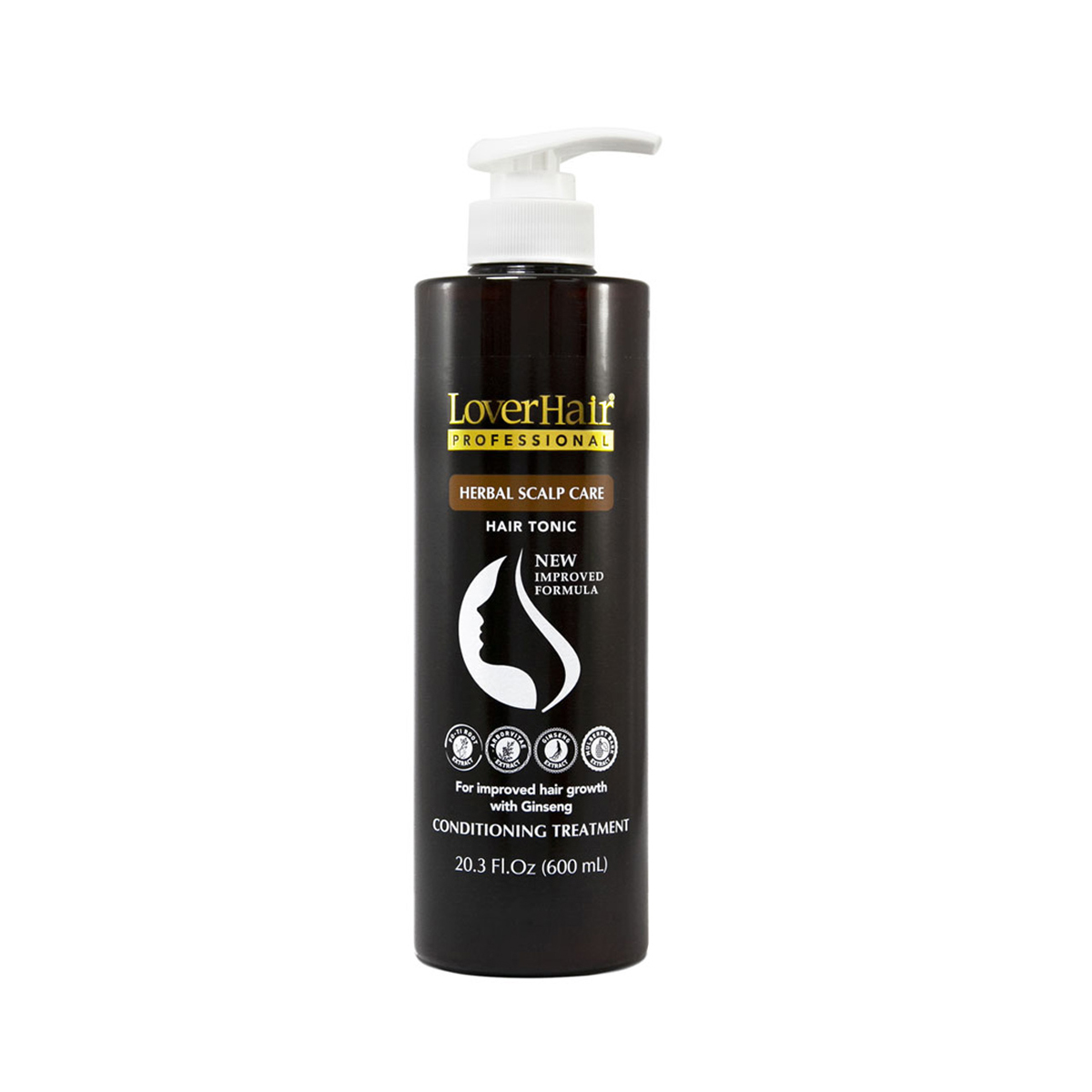
LoverHair Professional Herbal Scalp Care Shampoo & Conditioner — 600ml each
The Sprout Energizing System (Fo-Ti, Arborvitae, Red Ginseng, Mulberry Bark) helps calm an irritated scalp and control dandruff-related flaking as part of a daily routine — alongside any treatment your GP or dermatologist recommends for an underlying scalp condition.
Medications & Medical Treatments
A wide range of medications list hair loss as a side effect. Chemotherapy drugs are the most well-known — they target rapidly dividing cells, which includes hair follicles. But many other medications can cause thinning or shedding, including blood thinners, some antidepressants, beta-blockers, lithium, retinoids, and certain cholesterol medications.
Radiation therapy to the head can also cause hair loss in the treated area, which may be permanent if the dose is high enough to damage follicle stem cells.
What to Do
Hairstyling & Traction Alopecia
Repeated tension on hair follicles from tight hairstyles — braids, weaves, ponytails, or extensions — causes traction alopecia. Initially reversible, it can become permanent if the traction continues long-term and scar tissue forms around the follicles.
Heat damage, chemical relaxers, and bleach can also weaken and break hair shafts, thinning the appearance of hair — though this isn’t true follicle loss in the same way. Still, the cumulative damage significantly weakens strands.
What to Do
Autoimmune & Other Medical Conditions
Beyond alopecia areata, several systemic autoimmune diseases cause hair loss as a symptom. Lupus can cause scarring alopecia (permanent follicle destruction) as well as non-scarring diffuse loss. Undiagnosed coeliac disease leads to nutrient malabsorption that starves follicles. Diabetes and inflammatory bowel disease are also associated with hair thinning.
If hair loss is accompanied by fatigue, joint pain, unexplained weight changes, or rashes, an underlying systemic condition should be investigated by your GP.
What to Do
You notice sudden patchy hair loss, rapid overall thinning, scalp inflammation or scarring, hair loss accompanied by fatigue or other symptoms, or loss in a child. Scarring alopecias cause permanent follicle damage — early intervention matters most for these conditions.
When to See a Doctor About Hair Loss
Supporting Healthy Hair — Universal Tips
Regardless of the underlying cause, certain habits support follicle health across the board.
Prioritise Sleep
7–9 hours of sleep allows growth hormone — which supports tissue repair, including follicle health — to peak during deep sleep stages. Chronic sleep deprivation elevates cortisol, which works against hair growth.
Daily Scalp Massage
Even 4 minutes of daily scalp massage has been shown in clinical research to increase hair thickness over time, likely by stretching follicle cells and improving blood flow. It’s low-effort and has no downsides.
Stay Hydrated
Hair shafts are roughly 25% water, and even mild dehydration reduces strand flexibility and increases breakage. Aim for at least 8 glasses of water daily — more if you’re active.
Manage Stress
Chronic stress is one of the most underappreciated drivers of hair loss. Regular exercise, mindfulness practices, and social connection are physiological regulators that directly affect the hair growth cycle.
The easiest way to apply these tips consistently is to fold them into your existing shower routine. Massaging your scalp for 2–3 minutes while shampooing — using a herbal scalp tonic shampoo with Ginseng and Peppermint Oil — combines the cleansing step with the massage step, so you’re not adding extra time to your day. See the full scalp massage technique and clinical evidence here.
Frequently Asked Questions
Can hair loss be reversed?
It depends on the cause and how early it’s addressed. Telogen effluvium, nutritional deficiencies, hormonal imbalances, and many medication-induced cases are fully reversible once the underlying cause is resolved. Genetic pattern hair loss can be slowed and partially improved with treatments like minoxidil. Scarring alopecias — from conditions like lupus or longstanding traction alopecia — may cause permanent loss in affected areas, which is why early intervention matters.
How much hair loss per day is normal?
Losing 50–100 hairs per day is considered within the normal range. With roughly 100,000 hair follicles on the scalp, this represents less than 0.1% of total hair daily — enough to cycle normally without visible thinning. If you’re consistently seeing handfuls in the shower or on your pillow, that’s worth investigating further.
Does stress really cause hair loss?
Yes — and it’s well documented. Psychological stress elevates cortisol, which disrupts the hair growth cycle and can push follicles prematurely into the resting phase. This leads to telogen effluvium, typically appearing 2–3 months after the stressful event. Chronic stress can also worsen androgenetic alopecia and trigger alopecia areata flares.
Does wearing a hat cause hair loss?
No — this is a persistent myth. Hats don’t restrict blood flow enough to affect follicles, nor do they trigger hormonal changes. Very tight headwear worn constantly could theoretically contribute to traction over a long period, but casual hat-wearing has no meaningful effect on hair loss.
What blood tests should I ask for if I’m losing hair?
A comprehensive panel typically includes: ferritin (stored iron), a complete blood count, a thyroid panel (TSH, Free T3, Free T4), vitamin D, zinc, B12, fasting blood glucose, and relevant hormone levels (testosterone, DHEA-S, prolactin, and for women, oestradiol and FSH). Your GP or dermatologist may also recommend a scalp biopsy for cases that are difficult to diagnose.
Are hair loss supplements worth taking?
Supplements help most when you have an actual deficiency — not as a general booster. Taking extra biotin when your levels are already normal, for example, won’t accelerate growth. That said, multi-ingredient hair supplements often show modest benefit in studies, likely because they address several nutritional gaps simultaneously. The best first step is ruling out specific deficiencies with blood work before spending on supplements.
Where can I find products to support hair fall in Australia?
LoverHair’s range covers several of the causes above — the Hair Fall Control range with Biotin and Ginseng supports follicle strength for general thinning, the Herbal Scalp Care range helps with scalp balance and dandruff, and the Lover’s Hairow Scalp Tonic range supports circulation as part of a daily massage routine. See our full guide on where to buy hair growth products in Australia for a complete retailer comparison.

Sourcing and distributing herbal scalp care and hair growth products from South Korea. See full bio →

