
🔬 Science-Backed 2026 Guide 🇦🇺 Australia
Scalp Massage for Hair Growth — Does It Really Work?
The clinical studies, the best technique, and how to pair it with treatments for maximum results.
Quick Answer
Yes — scalp massage genuinely works for hair growth. A 2016 controlled clinical study (Ito et al., Eplasty) showed measurable increases in hair thickness after 24 weeks of daily 4-minute scalp massage. A 2019 survey of 327 men found 69% reported stabilised or increased hair density. The mechanism is mechanotransduction — physical pressure on follicle cells triggers gene upregulation associated with the anagen (growth) phase. Four minutes daily, every day, is the evidence-backed minimum dose.
Scalp massage is one of those hair growth tips that sounds almost too simple to be true. Can pressing your fingertips into your scalp for a few minutes a day actually make your hair grow thicker and faster? The short answer, backed by clinical research: yes — and the mechanism is more interesting than you’d expect. Here’s everything the science says, the exact technique, and how to layer it with treatments for maximum results.
The Science: How Scalp Massage Stimulates Hair Growth
Scalp massage works through several distinct biological mechanisms — not just one. Understanding why it works helps explain why technique and consistency matter so much.
Improved Blood Flow
Massage increases circulation to the scalp, delivering more oxygen, nutrients, and growth signals to hair follicles. Well-nourished follicles produce thicker, stronger hair shafts and spend more time in the active anagen (growth) phase.
Mechanical Stretching (Mechanotransduction)
Physical pressure on follicle cells triggers mechanotransduction — cells convert mechanical force into biochemical signals. Stretched dermal papilla cells upregulate genes associated with hair growth and follicle elongation.
Reduced DHT Activity
Research suggests scalp massage may reduce local levels of DHT — the hormone responsible for follicle miniaturisation in pattern hair loss. Improved lymphatic drainage and reduced scalp inflammation appear to play a role.
Cortisol Reduction
Chronic stress elevates cortisol, which disrupts the hair growth cycle and accelerates shedding. Scalp massage activates the parasympathetic nervous system, measurably lowering cortisol — removing a significant non-genetic driver of hair loss.
Gene Expression Upregulation
A 2016 Japanese study found that standardised scalp massage upregulated hair-growth genes (IL-6, NOGGIN, BMP4) in dermal papilla cells — genes directly involved in keeping follicles in the active anagen phase.
Enhanced Product Absorption
Massaging active ingredients — rosemary oil, peptide serums, caffeine — into the scalp significantly increases their penetration and efficacy. A massage-free application sits on the surface; a massaged application reaches the follicle.
The Clinical Evidence — What the Studies Actually Show
Ito et al., 2016 — Eplasty Journal (Hair Thickness Study)
Nine healthy men received standardised 4-minute scalp massages daily for 24 weeks. Hair thickness increased significantly compared to baseline. Gene expression analysis confirmed upregulation of hair-growth genes in dermal papilla cells — the first controlled study to establish a direct link between mechanical scalp stimulation and measurable hair growth.
English & Barazesh, 2019 — Self-Reported Survey (327 participants)
A large self-reported study of 327 men who practised daily scalp massage found that 69% reported stabilised or increased hair density after an average of 11.6 months. Participants who massaged longer each day (10–20 minutes) tended to report better outcomes — though the 4-minute daily group still showed meaningful benefit. This study also confirmed that consistency of daily practice was a stronger predictor of outcome than session duration.
Does Scalp Massage Work for All Types of Hair Loss?
Scalp massage is not a universal fix — but it is a universally beneficial complementary practice. How much it helps depends on the underlying cause of your hair loss.
| Hair Loss Type | How Well Massage Helps | Best Combined With |
|---|---|---|
| Telogen Effluvium (stress/post-illness shedding) |
✓✓ Highly effective — addresses cortisol and circulation directly | Nutritional support, rosemary serum, herbal scalp tonic |
| Androgenetic Alopecia (pattern hair loss) |
✓ Moderate — can slow progression; rarely reverses alone | Rosemary oil or Minoxidil paired with massage |
| Postpartum Hair Loss | ✓✓ Effective — supports circulation and reduces stress hormones | Postnatal supplements, herbal scalp tonic (no Minoxidil) |
| Nutritional Deficiency (iron, zinc, vitamin D) |
✓ Supportive — improves nutrient delivery once deficiencies corrected | Iron, zinc, vitamin D supplementation first |
| Traction Alopecia | ✓ Helpful for recovery — improves circulation to stressed follicles | Avoid tight hairstyles; gentle daily massage |
| Alopecia Areata | ~ Limited — autoimmune cause not addressed by massage | Use gently around (not on) active patches; see dermatologist |
| Scarring Alopecia | ✗ Not indicated — follicles permanently damaged | See a dermatologist immediately |
How to Massage Your Scalp for Hair Growth — Step by Step
Technique matters significantly. A rushed, random head rub is not the same as a deliberate, methodical scalp massage. Here’s exactly how to do it correctly to get clinical-study-level results.
Start on a clean or slightly damp scalp
Scalp massage can be done on dry hair, but it’s most effective immediately after applying a scalp serum or treatment oil. The mechanical action of massage drives active ingredients significantly deeper into the scalp compared to non-massaged application.
Apply a scalp-active treatment first (recommended)
Apply a rosemary-based scalp serum, peptide treatment, or lightweight herbal scalp tonic in sections before massaging. Part the hair and apply directly to the skin — not the strands — in 4–6 spots across the scalp. The Lover’s Hairow Scalp Tonic 5in1 is ideal here: lightweight, non-greasy, and designed for scalp absorption.
💡 Applying the tonic before massage = significantly deeper penetration of Fo-Ti, Ginseng, and Red Ginseng actives
Use your fingerpads — not fingertips or nails
Place the pads of all eight fingers plus both thumbs on the scalp. Apply firm but comfortable pressure — you should feel the scalp moving slightly against the skull, not your fingers sliding over the hair. Nails can scratch and inflame the scalp, undoing the benefits of the massage.
Use small circular motions — move the scalp, not the hair
The goal is to move the skin of the scalp over the skull in small, deliberate circular motions — approximately 1–2 cm in diameter. This is the mechanical stretching action that triggers dermal papilla gene expression. Work in a systematic pattern: start at the nape of the neck, move to the sides, then the crown, then the hairline. Spend about 30 seconds on each zone.
💡 Moving the scalp skin (not just the hair) is what creates the mechanotransduction effect the studies measured
Maintain for a minimum of 4 minutes daily
The landmark clinical study used 4 minutes as the standardised dose. Set a timer — 4 minutes feels longer than expected once you’re being deliberate about it. If you can extend to 10 minutes, survey research suggests even better outcomes. Consistency is the non-negotiable variable: 4 minutes every day far outperforms 20 minutes twice a week by a wide margin.
Do not rinse immediately if using a leave-in treatment
If you’ve applied a leave-in serum or scalp tonic before massaging, allow it to remain for at least 30 minutes — or overnight — before washing. If using a pre-shampoo oil treatment, massage in and leave for 20–30 minutes before cleansing with a sulphate-free shampoo.
💡 The longer the leave-in contact time, the greater the cumulative benefit from herbal actives
Fingers vs Scalp Massage Tools — Which Is Better?
Manual finger massage is the gold standard — it’s the method used in all clinical studies. Several tools are useful additions, particularly for longer sessions or in-shower use.
✓ Finger Massage — Gold Standard
+ Scalp Massage Tools
Scalp dermarolling (microneedling) at 0.25–0.5mm can significantly boost absorption of topical hair growth actives and has clinical evidence for hair growth in its own right. However, it should never be used on inflamed, irritated, or infected scalp. Replace needles after 8–10 uses. Never share a dermaroller. If you have alopecia areata or any active scalp condition, consult a dermatologist before microneedling. Do not dermaroll daily — limit to 1–2 times per week.
When Is the Best Time to Massage Your Scalp?
Apply & Absorb Through the Day
Apply scalp serum after your morning shower on a clean scalp. Massage in for 4–5 minutes, then style as usual. The product absorbs as you go about your morning. Easy to build into an existing routine — and the Peppermint Oil in the Scalp Tonic 5in1 gives a refreshing start to the day.
Overnight Treatment — Maximum Contact Time
Apply scalp treatment before bed and massage in thoroughly. The product works overnight while you sleep — when growth hormone peaks and follicle repair is most active. Rinse in the morning if needed. An overnight leave-in treatment massaged into the scalp gets 8+ hours of contact time versus a few hours during the day. The biology favours evening application.
The evening routine wins on biology — growth hormone peaks during deep sleep and an overnight massaged-in treatment gets 8+ hours of follicle contact time. If an evening routine isn’t practical, morning massage with a leave-in serum is still highly effective. What matters most is that you do it every day without skipping. Daily consistency over months is the single strongest predictor of results in both studies.
Combining Scalp Massage With Other Treatments
Scalp massage is one of the best-value additions to any hair growth protocol because it amplifies the effectiveness of whatever else you’re already doing.
Scalp Massage + Rosemary Oil or Herbal Scalp Tonic
The most powerful natural combination. Rosemary oil inhibits DHT and improves follicle circulation; herbal tonics (Fo-Ti, Ginseng, Red Ginseng) deliver growth-activating compounds directly to dermal papilla cells. Massage amplifies both by increasing blood flow and driving actives deeper. Apply the treatment first, then massage in. Studies suggest rosemary combined with massage may significantly outperform rosemary applied without massage.
Scalp Massage + Minoxidil
Massage significantly increases the absorption of topical Minoxidil — meaning more active drug reaches the follicle from the same application dose. Apply Minoxidil first per the product instructions, then massage gently for 2 minutes. Note: avoid vigorous massage immediately after applying Minoxidil foam as it can cause the product to spread beyond the intended treatment area.
Scalp Massage + Nutritional Supplementation
If you’re correcting an iron, zinc, or vitamin D deficiency — a common driver of telogen effluvium — scalp massage improves blood delivery of those nutrients to the follicle, directly speeding up the recovery timeline. Think of massage as the delivery mechanism that makes your supplements work more effectively at the scalp level.
Scalp Massage + In-Shower Shampoo Routine
Turn your daily shampoo into a scalp massage session. Apply the shampoo to a wet scalp and massage in circular motions for a full 2–3 minutes before rinsing — combining cleansing with active scalp stimulation in one step. A herbal scalp shampoo with Ginseng, Biota Orientalis, and Peppermint activates follicle circulation during the wash, so every shampoo session builds on your daily massage practice.
Best Products to Use During Scalp Massage
⭐ #1 Pick — Leave-in Scalp Tonic
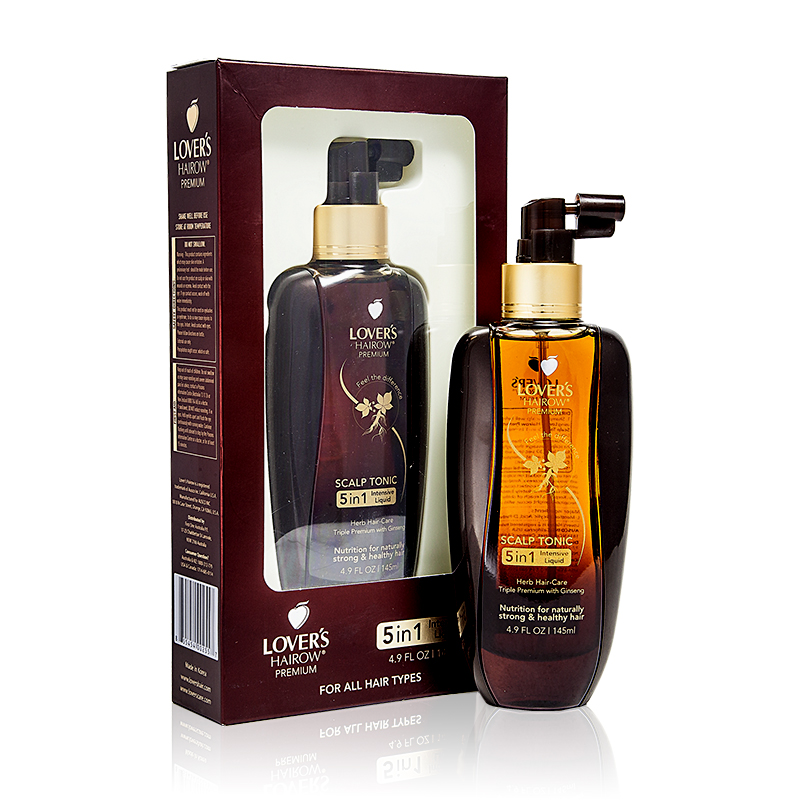
Lover’s Hairow Premium Scalp Tonic 5in1 Intensive Liquid — 145ml
Formulated specifically for scalp application and massage routines — lightweight, fast-absorbing, and packed with herbal actives that work with the massage motion. Apply to scalp, massage in for 4 minutes, leave in overnight. Do not rinse. Fo-Ti Root, Red Ginseng, Ginseng, Salicylic Acid, and Menthol deliver a 5-in-1 scalp action.
🚿 In-Shower Pick — Scalp Tonic 2-in-1 Shampoo & Conditioner
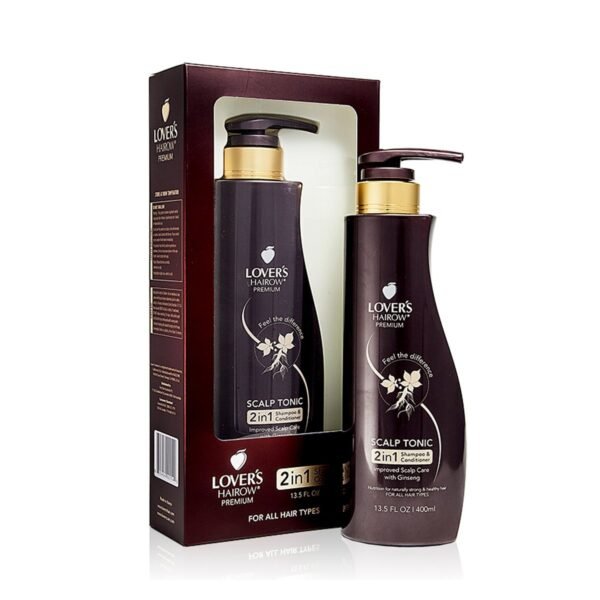
Lover’s Hairow Scalp Tonic 2-in-1 Shampoo & Conditioner — 400ml
Turn your daily shampoo into a scalp massage session. The Peppermint Oil creates an immediate scalp-stimulating cooling sensation during massage — confirming follicle activation with every wash. Apply to wet scalp, massage in circular motions for 2–3 minutes, then rinse. Fo-Ti Root, Ginseng, Biota Orientalis, and genuine Peppermint Oil. AU$45.99.
🌿 Wash-off Scalp Treatment — Herbal Scalp Care Combo
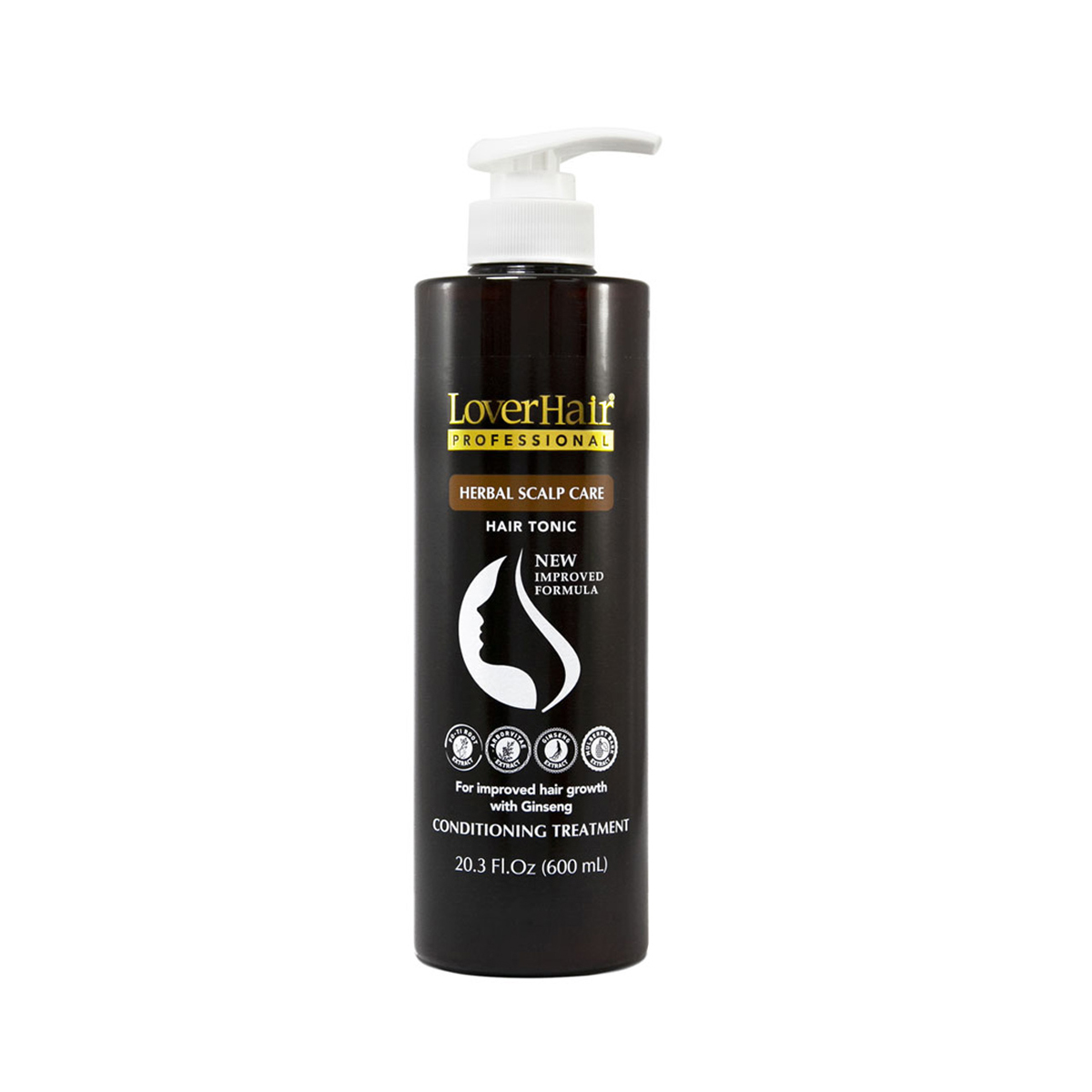
LoverHair Professional Herbal Scalp Care Shampoo & Conditioner — 600ml each
For a comprehensive wash-day scalp massage routine. The shampoo’s Sprout Energizing System (Fo-Ti, Arborvitae, Ginseng, Mulberry Bark) and Menthol activate during the 2-minute lather-massage. Follow with the conditioner — also designed for scalp application — for a full two-step herbal scalp treatment. AU$69 combo.
Frequently Asked Questions
Does scalp massage really help hair grow?
Yes — clinical evidence supports it. A 2016 controlled study showed measurable hair thickness increases after 24 weeks of daily 4-minute scalp massage. A 2019 survey of 327 men found 69% reported stabilised or increased hair density with consistent daily practice. The mechanisms include improved blood flow, mechanical stretching of follicle cells (mechanotransduction), cortisol reduction, and significantly enhanced absorption of any topical treatments applied beforehand.
How long does scalp massage take to work?
Most users notice reduced daily shedding within 4–8 weeks of consistent daily practice. Visible improvements in hair thickness and density typically take 3–6 months. The clinical study that showed measurable results ran for 24 weeks (6 months). Patience and daily consistency are the most critical variables — results don’t appear overnight, but the cumulative effect is well-documented and builds progressively.
How many minutes of scalp massage per day is needed?
The landmark clinical study used 4 minutes of standardised daily massage and found significant results. Longer sessions (10–20 minutes) appear to produce better outcomes based on survey data, but 4 minutes daily is the evidence-backed minimum. The most important variable is daily consistency — 4 minutes every day far outperforms 20 minutes twice a week.
Should I use oil or a serum when massaging my scalp?
Dry massage is effective — it’s what the clinical studies used. However, pairing massage with a herbal scalp serum or tonic significantly enhances outcomes, because the mechanical action drives active ingredients deeper into the scalp than non-massaged application. If using an oil, choose lightweight options like jojoba or argan over heavy oils like coconut, which can cause scalp buildup and block follicles in some people. The Lover’s Hairow Scalp Tonic 5in1 is specifically formulated for massage-in application and overnight leave-in use.
Can scalp massage stop hair loss?
Scalp massage can significantly reduce hair loss caused by stress, poor circulation, and telogen effluvium — which together account for a large proportion of non-genetic hair loss cases. For androgenetic (pattern) hair loss, massage is most effective as part of a combined protocol with rosemary oil or Minoxidil. It is unlikely to fully stop or reverse advanced genetic hair loss on its own, but it is a valuable adjunct to any protocol — free, safe, and with no side effects when done correctly.
Is scalp massage safe every day?
Yes — daily scalp massage is completely safe for most people when done correctly with fingerpads (not nails) and appropriate pressure. Avoid massaging actively inflamed, irritated, or infected scalp areas. If you have alopecia areata, massage gently around — not directly on — active bald patches. Dermarolling should not be done daily — limit to 1–2 times per week and always sterilise your device.
What is the best scalp massage technique?
The technique used in the 2016 clinical study: use the pads (not tips) of all fingers and both thumbs, apply firm pressure to move the scalp skin over the skull in small circular motions of approximately 1–2 cm diameter. Work systematically from the nape of the neck to the crown and hairline, spending about 30 seconds per zone. The key is moving the scalp itself — not just running fingers through hair. This creates the mechanotransduction effect that triggers follicle gene upregulation.

Sourcing and distributing herbal scalp care and hair growth products from South Korea. See full bio →

