
👶 Postpartum Care 2026 Guide 🇦🇺 Australia
How to Stop Hair Loss After Having a Baby
Why it happens, when it ends, and the gentle scalp care routine that helps your hair recover faster.
Quick Answer
Postpartum hair loss is caused by a sudden drop in oestrogen after birth — it is temporary and almost always self-resolving, typically peaking around 3–4 months postpartum and easing by 6–12 months. You can’t stop the hormonal shedding itself, but you can support your scalp and follicles through it with gentle, sulphate-free haircare, scalp massage, and good nutrition — all of which help your hair return to its full thickness faster and in better condition.
If you’ve noticed clumps of hair in the shower drain, on your pillow, or wrapped around your hairbrush a few months after giving birth — you’re not imagining it, and you’re far from alone. Postpartum hair loss is one of the most common (and most alarming-looking) experiences of the fourth trimester. The good news: it’s temporary, it’s hormonal, and there’s a lot you can do to support your scalp and hair through it. Here’s everything you need to know.
Why Does Hair Fall Out After Having a Baby?
During pregnancy, elevated oestrogen levels extend the hair’s anagen (growth) phase — which is why many women experience thicker, fuller hair throughout pregnancy. Hair that would normally have shed on its own schedule simply doesn’t. It stays put, month after month, building up a backlog.
After birth, oestrogen levels drop sharply — often within days. This sudden hormonal shift pushes a large proportion of those “overdue” hairs into the telogen (resting/shedding) phase all at once. The medical term for this is telogen effluvium, and postpartum hormonal shifts are one of its most common triggers. Essentially, you’re not losing extra hair — you’re shedding the hair you “saved up” during pregnancy, all in a compressed window.
Postpartum hair loss is not actual hair loss in the sense of permanent thinning — it’s a temporary acceleration of the natural shedding cycle. Almost everyone who experiences it returns to their pre-pregnancy hair density within a year. Understanding this can ease a lot of the anxiety that comes with watching your hair shed more than usual.
What Else Contributes to Postpartum Hair Changes
Hormonal Shift (Primary Cause)
The sharp drop in oestrogen and progesterone after birth is the main driver. This single hormonal change accounts for the vast majority of postpartum shedding — and it resolves on its own as hormone levels stabilise.
Sleep Deprivation & Stress
The physical and emotional demands of caring for a newborn elevate cortisol and disrupt sleep — both of which can independently worsen telogen effluvium and extend the shedding phase if not addressed.
Nutritional Depletion
Pregnancy, birth, and breastfeeding all draw heavily on iron, zinc, vitamin D, and B-vitamin stores. Deficiencies in any of these can compound hormonal shedding and slow regrowth — and are common in the postpartum period.
Breastfeeding Hormones
Prolactin, the hormone responsible for milk production, can also influence the hair cycle. Some mothers notice shedding continues slightly longer while breastfeeding, with a more noticeable regrowth phase after weaning.
The Postpartum Hair Loss Timeline
Knowing what to expect — and when — makes this period far less stressful. Here’s the typical timeline most mothers experience.
Normal Hair, No Change Yet
In the first weeks postpartum, hair often still looks thick and full from the pregnancy hormone boost. Shedding hasn’t started yet for most mothers — this is the calm before the storm.
Peak Shedding
This is when most mothers notice the change — significantly more hair in the shower drain, on the pillow, and in the brush. It can feel alarming, especially around the hairline where shorter regrowth “baby hairs” may also start appearing. This is the most intense phase, and it is temporary.
Shedding Begins to Slow
The rate of hair loss gradually decreases. You may still notice more shedding than pre-pregnancy, but it should feel less dramatic than the 3–4 month peak. Regrowth at the hairline becomes more visible.
Recovery & Regrowth
For most mothers, hair density returns to pre-pregnancy levels within 6–12 months of giving birth. Shorter “baby hairs” around the hairline grow out and blend with the rest of your hair. By the one-year mark, most women report their hair feels back to normal.
If Shedding Continues — See a GP
If significant shedding continues beyond 12 months, or if you notice patchy bald spots rather than diffuse thinning, it’s worth seeing your GP. Other causes — thyroid changes, iron deficiency, or other forms of hair loss — should be ruled out. Persistent shedding beyond a year is not typical postpartum hair loss.
Postpartum Hair Loss vs Other Types of Hair Loss
| Type | Pattern | Resolves on Its Own? |
|---|---|---|
| Postpartum Shedding | Diffuse, all-over — heaviest around 3–4 months postpartum | ✓ Yes — typically by 6–12 months |
| Androgenetic Alopecia (pattern hair loss) |
Gradual diffuse thinning at the crown, can be unmasked by postpartum hormone shift | ✗ No — progressive without treatment |
| Iron-Deficiency Shedding | Diffuse, often coincides with or follows postpartum shedding | ~ Resolves once iron levels are corrected |
| Postpartum Thyroiditis | Diffuse shedding, often with fatigue, weight changes, mood changes | ~ Resolves with thyroid treatment if needed |
| Alopecia Areata | Patchy, circular bald spots — distinct from diffuse shedding | ✗ No — needs dermatologist assessment |
See your GP if: shedding is patchy rather than diffuse, hair loss continues unabated beyond 12 months postpartum, you notice other symptoms like extreme fatigue, weight changes, or mood changes (which can indicate postpartum thyroiditis), or you’re concerned about your iron levels — common after birth, especially with significant blood loss during delivery. A simple blood test can rule out treatable causes that may be compounding normal postpartum shedding.
How to Support Your Hair Through Postpartum Shedding
You can’t stop the hormonal shedding itself — it’s a normal, healthy part of your body recalibrating after birth. But you can create the best possible conditions for your follicles to recover quickly and for new growth to come in strong.
Switch to a gentle, sulphate-free shampoo and conditioner
Postpartum hair can feel different — sometimes drier, sometimes oilier, often more fragile. Sulphates can be unnecessarily stripping during this transitional period. A gentle, sulphate-free formula cleanses effectively without adding stress to hair that’s already shedding more than usual.
Add gentle scalp massage to your routine
Scalp massage improves circulation to follicles, helps reduce the cortisol that sleep deprivation elevates, and supports the scalp environment for the new hairs growing in. Two to three minutes during your regular wash — focusing on the crown and hairline where new growth often starts first — is a simple, safe addition with no side effects.
💡 Massage is one of the few things proven to help during this period that’s also completely safe while breastfeeding
Use a leave-in scalp tonic for ongoing support
A lightweight, herbal leave-in scalp tonic applied after washing gives your scalp continued support throughout the day. Look for formulas with Ginseng and herbal actives that support circulation — avoid Minoxidil-based products while breastfeeding unless specifically advised by your doctor.
Prioritise iron, zinc, and vitamin D
These three nutrients are commonly depleted after birth and are directly linked to hair health. If you’re breastfeeding, continue your prenatal or postnatal multivitamin — many are specifically formulated to support hair, skin, and energy during this period. Speak to your GP about checking your iron levels, especially if you experienced significant blood loss during delivery.
Be gentle with styling during peak shedding
Around the 3–4 month peak, hair can feel more fragile. Avoid very tight hairstyles (which add traction stress to already-stressed follicles), use a wide-tooth comb on wet hair, and consider a lower-heat setting on styling tools. These small adjustments reduce additional breakage on top of the hormonal shedding.
Be patient — and give it time
This is the hardest step but the most important. The shedding phase feels endless when you’re in it, but it follows a predictable timeline. Most mothers see meaningful improvement by 6 months and feel “back to normal” by 12 months. Taking a photo each month can help you see gradual regrowth that’s hard to notice day-to-day.
What’s Safe While Breastfeeding?
Topical haircare products are not absorbed systemically in meaningful amounts and are considered safe during breastfeeding.
Completely safe, free, and may help with both circulation and the cortisol-reducing benefits that support hair health postpartum.
Ginseng and herbal-based leave-in scalp tonics without Minoxidil are generally considered safe for topical use while breastfeeding.
Topical Minoxidil’s safety during breastfeeding hasn’t been definitively established. Most clinicians advise avoiding it until breastfeeding has finished — discuss with your GP if you’re considering it.
Continuing a postnatal multivitamin supports both your recovery and milk supply, and addresses common postpartum nutrient depletion linked to hair shedding.
Before adding additional supplements like high-dose biotin or saw palmetto, check with your GP or lactation consultant — some herbal supplements aren’t well studied during breastfeeding.
A Gentle Postpartum Scalp Care Routine
Here’s a simple, realistic routine for the postpartum period — designed to fit into the limited time and energy new mothers actually have.
🧴 Wash Step — Gentle, Sulphate-Free Cleanse
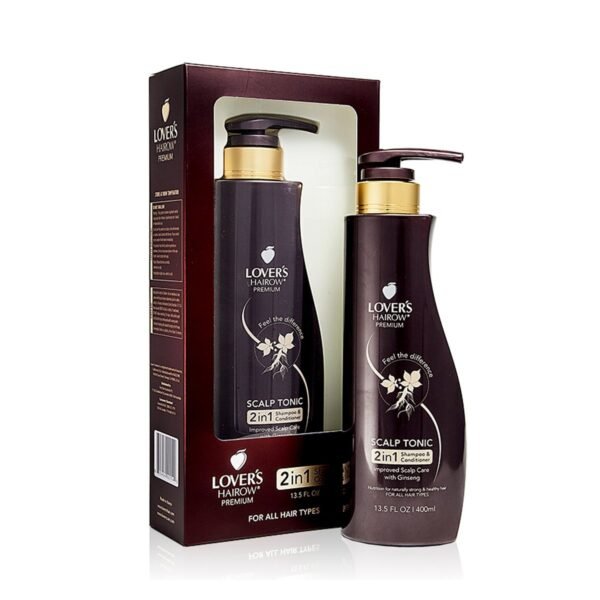
Lover’s Hairow Scalp Tonic 2-in-1 Shampoo & Conditioner — 400ml
A gentle sulphate-free 2-in-1 wash that simplifies the postpartum routine to one step — ideal when shower time is limited. Ginseng and herbal actives support scalp circulation while the genuine Peppermint Oil gives a refreshing cooling sensation during the 2–3 minute massage step. Cleanses and conditions without stripping.
💧 Leave-in Step — Daily Scalp Support
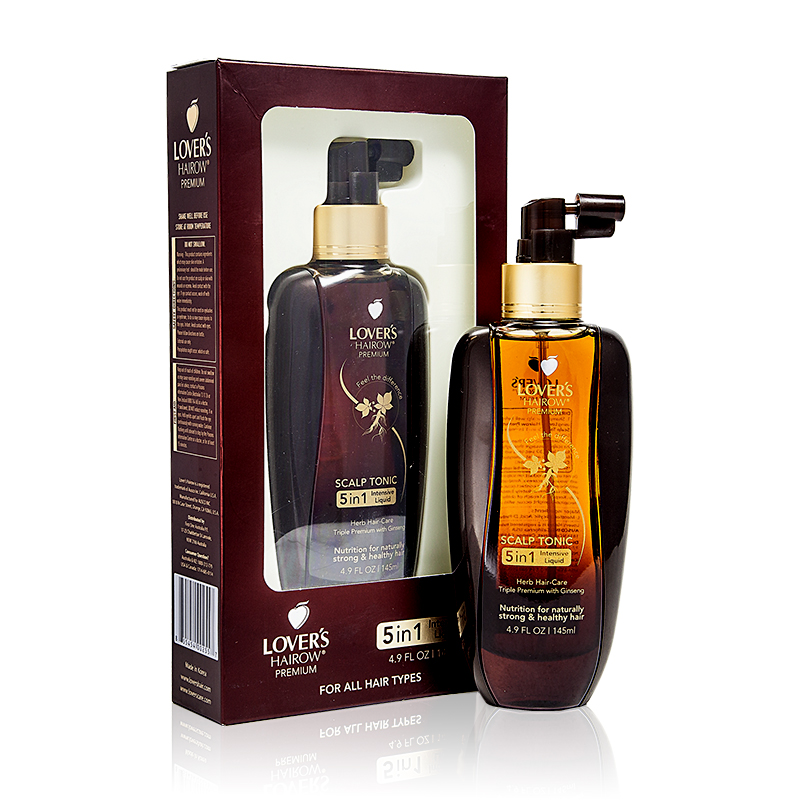
Lover’s Hairow Premium Scalp Tonic 5in1 Intensive Liquid — 145ml
A lightweight leave-in scalp tonic with Fo-Ti Root, Panax Ginseng, and Red Ginseng — no Minoxidil. Apply to the scalp after washing and massage in for a couple of minutes; do not rinse. Supports scalp circulation and follicle health throughout the day, fitting easily into a busy new-parent routine.
Wash with the 2-in-1 every other day, massaging the scalp for 2–3 minutes during the lather — easy to do even on minimal sleep. On non-wash days (or after washing), apply the leave-in tonic to the scalp and massage briefly before bed. Two simple steps, a few minutes each, that fit around feeding and sleep schedules rather than competing with them.
Frequently Asked Questions
Is postpartum hair loss normal?
Yes — it’s extremely common, affecting an estimated 40–50% of new mothers to a noticeable degree. It’s caused by the sharp drop in oestrogen after birth, which releases hair that was “held” in the growth phase during pregnancy all at once. It is a normal, temporary part of the postpartum recovery process and is not a sign that something is wrong.
When does postpartum hair loss stop?
Shedding typically peaks around 3–4 months after birth and gradually slows from there. Most mothers see their hair return to pre-pregnancy density by 6–12 months postpartum. If significant shedding continues well beyond 12 months, or if you notice patchy rather than diffuse loss, it’s worth checking with your GP to rule out other causes such as thyroid changes or iron deficiency.
Can I do anything to stop postpartum hair loss?
You can’t stop the hormonal shedding itself — it’s a normal recalibration your body needs to go through. However, you can support your scalp and follicles to recover well: use a gentle sulphate-free shampoo and conditioner, add daily scalp massage, support nutrition (especially iron, zinc, and vitamin D), and be gentle with styling during the peak shedding period. These steps help your hair come back in stronger and may make the transition feel less dramatic.
Is it safe to use hair products while breastfeeding?
Topical shampoos, conditioners, and herbal scalp tonics without Minoxidil are generally considered safe during breastfeeding — they’re not absorbed systemically in meaningful amounts. Minoxidil’s safety during breastfeeding hasn’t been definitively established, so most clinicians recommend avoiding it until breastfeeding has finished. Always check with your GP or lactation consultant before starting any new oral supplement.
Why is my hairline so wispy with short hairs after having a baby?
Those short, wispy hairs around your hairline are new regrowth — a sign your hair is recovering, not a new problem. As the follicles that shed during the 3–4 month peak re-enter the growth phase, the new hairs start short and gradually grow out. This “baby hair” look at the hairline is one of the most common signs of the recovery phase beginning, typically appearing from around 4–6 months postpartum.
Does breastfeeding make hair loss worse or last longer?
Breastfeeding can influence the timeline slightly — prolactin, the milk-production hormone, interacts with the hair cycle, and some mothers notice shedding continues a little longer while breastfeeding, with a more noticeable regrowth phase after weaning. However, the overall pattern — peak around 3–4 months, recovery by 6–12 months — holds for most mothers regardless of feeding method.
When should I see a doctor about postpartum hair loss?
See your GP if: hair loss is patchy rather than diffuse (spread evenly across the scalp), shedding continues without improvement beyond 12 months, you have other symptoms like persistent fatigue, weight changes, or mood changes (which could indicate postpartum thyroiditis), or you’re concerned about iron levels — especially if you had significant blood loss during delivery. A simple blood test can identify treatable contributing factors.

Sourcing and distributing gentle, sulphate-free scalp care from South Korea. See full bio →

