Rosemary Oil vs Minoxidil — Which Actually Works for Hair Growth?
Two of the most-searched hair loss treatments in Australia right now are rosemary oil and Minoxidil — but they couldn’t be more different. One is a centuries-old herbal remedy. The other is a pharmaceutical drug originally developed for blood pressure. So which one actually regrows hair? We break down the science, the side effects, the cost, and what really works for Australians in 2026.
A 2015 clinical trial found rosemary oil performed comparably to 2% Minoxidil for androgenetic alopecia at six months, with less scalp irritation. Minoxidil has decades more clinical evidence and is stronger for moderate-to-severe pattern loss, but causes more side effects and must be used indefinitely. For mild-to-moderate thinning or a natural, side-effect-free option, rosemary oil is the smart starting point; for advanced loss, Minoxidil — or a combination — is more effective.
What Are Rosemary Oil and Minoxidil?
Rosemary oil is an essential oil extracted from Rosmarinus officinalis, used for centuries across the Mediterranean and Asia to improve scalp circulation and strengthen hair. Its key actives are carnosic acid (supports nerve and tissue repair) and ursolic acid, which inhibits 5-alpha reductase — the enzyme that converts testosterone into DHT, the hormone most responsible for pattern hair loss.
Minoxidil was developed in the 1960s as an oral blood-pressure medication; increased hair growth was a noted side effect, and a topical version was FDA-approved for hair loss in the 1980s as Rogaine. It widens blood vessels around follicles to boost blood flow and extends the anagen (growth) phase. Available in 2% and 5% topical strengths and, more recently, low-dose oral form prescribed in Australia.
Rosemary Oil vs Minoxidil — Head-to-Head Comparison
| Factor | 🌿 Rosemary Oil | 💊 Minoxidil |
|---|---|---|
| Mechanism | Inhibits DHT (5-AR), improves scalp circulation | Widens blood vessels, extends anagen phase |
| Clinical evidence | Comparable to 2% Minoxidil at 6 months (1 major study) | Extensive — 30+ years of FDA-approved data |
| Side effects | Minimal — occasional skin sensitivity | Scalp itch, dryness, initial shedding, possible facial hair |
| Shedding phase | None reported | Common in weeks 2–6 (temporary) |
| Best for | Mild-moderate loss, sensitive scalps, long-term use | Moderate-severe androgenetic alopecia |
| Works on women? | Yes — no hormonal concerns | Yes — 2% approved; 5% off-label |
| Prescription? | No — available OTC | Topical: No · Oral: Yes (in Australia) |
| Stop using = results lost? | Gradual — not as abrupt | Yes — hair loss resumes within months of stopping |
| Cost (monthly est.) | $15–$35 AUD | $30–$80 (topical) / $60–$120 (oral + consult) |
| Natural / clean? | Yes — plant-derived | No — synthetic pharmaceutical |
Pros & Cons Breakdown
Pros
- Clinically comparable to 2% Minoxidil at 6 months
- Natural, plant-derived ingredient
- No initial shedding phase
- Much less scalp irritation and itching
- No prescription required in Australia
- Affordable — from ~$15/month
- Safe for long-term daily use; works for men and women
Cons
- Limited clinical trials vs Minoxidil’s decades of data
- Must be diluted — pure essential oil can irritate skin
- Results may be slower for advanced hair loss
- Less effective as a standalone for severe alopecia
Pros
- Strongest clinical evidence base of any topical treatment
- FDA-approved for androgenetic alopecia
- Available in multiple strengths (2%, 5%, oral)
- Proven for moderate-to-severe hair loss
- Fast-acting — some users see results from 8 weeks
- Topical available OTC at Australian pharmacies
Cons
- Common initial shedding phase — alarming for new users
- Scalp itching, dryness and irritation very common
- Unwanted facial/body hair growth (especially 5%)
- Must be used indefinitely — loss returns if stopped
- Oral version can cause palpitations, dizziness
- Not suitable during pregnancy
How Each Treatment Works on Your Scalp
Shown to support nerve growth factor (NGF) expression — helping repair nerve endings around follicles and signalling dormant follicles to re-enter the growth phase.
Inhibits 5-alpha reductase — the enzyme that converts testosterone to DHT. Less DHT means less follicle miniaturisation and less pattern hair loss over time.
Opens potassium channels in blood vessel walls, causing them to dilate. Wider vessels deliver more oxygen and nutrients to follicles, supporting the active growth cycle.
Prolongs the anagen (growth) phase and shortens the telogen (resting) phase — meaning more hairs are actively growing at any given time.
Who Should Use Rosemary Oil?
Rosemary oil is an excellent choice if you have mild to moderate hair thinning and prefer a natural, low-side-effect approach. It is particularly well suited for:
- Women experiencing diffuse thinning or postpartum hair loss
- Anyone with a sensitive scalp that reacts badly to Minoxidil
- People who want to avoid pharmaceutical ingredients
- Those looking to complement an existing hair care routine
- Younger users in the early stages of hair loss
- Pregnant or breastfeeding women (always check with your doctor)
Who Should Use Minoxidil?
Minoxidil is the stronger clinical option, best suited to those with moderate to significant androgenetic alopecia who are committed to a long-term treatment plan:
- Men with a receding hairline or visible crown thinning
- Women with significant diffuse thinning diagnosed as pattern loss
- Anyone who has tried natural approaches without sufficient results
- People willing to commit to indefinite daily use
- Those under dermatologist supervision for hair loss
The Verdict — Which Should You Choose?
🌿 Rosemary Oil
No side effects, no prescription, comparable to 2% Minoxidil at 6 months. The smart starting point for mild-moderate thinning — and the best long-term maintenance option for keeping your hair without pharmaceutical dependency.
💊 Minoxidil
Decades of clinical proof and the strongest single-ingredient data for pattern hair loss. Best for moderate-severe androgenetic alopecia where a natural approach hasn’t delivered. Commit long-term or combine with natural treatments.
Can You Use Rosemary Oil and Minoxidil Together?
Yes — and many dermatologists are increasingly recommending a combined approach. Rosemary oil and Minoxidil work via different mechanisms, so they can complement each other rather than compete:
- Rosemary addresses DHT at the follicle level — Minoxidil addresses blood flow
- Rosemary can reduce the scalp irritation caused by Minoxidil
- Using both may produce faster, denser results than either alone
- If you want to eventually wean off Minoxidil, rosemary oil can be a maintenance strategy
If combining, apply rosemary oil-based products first and allow them to absorb before applying Minoxidil. Always patch-test any new product and consult a dermatologist if you have a history of scalp sensitivity.
How to Use Rosemary Oil for Hair Growth
Method 1 — Diluted Scalp Oil (Pure Essential Oil)
Mix 3–5 drops of pure rosemary essential oil with about 1 tablespoon of a carrier oil (jojoba, argan or coconut). Apply directly to the scalp, massage in circular motions for 2–3 minutes, and leave on for at least 30 minutes before washing out. Use 2–3 times per week.
Method 2 — Ready-Made Rosemary Serum (Easiest)
Use a pre-formulated serum that combines rosemary with other proven actives. Apply directly to the scalp daily — no mixing, no mess, no guessing the dilution ratio. This is the most consistent and convenient method for daily use.
Method 3 — Rosemary or Herbal Scalp Shampoo
Swap your regular shampoo for one containing rosemary or complementary scalp actives. This is the easiest habit to build since it replaces something you already do. For best results, massage into the scalp for 2–3 minutes before rinsing to maximise active-ingredient contact time.
Best Hair Growth Products to Try in Australia
If you’re ready to try a natural, herbal-active approach, start with an Australian-made formula. Here is our top pick, plus a dedicated rosemary serum option.
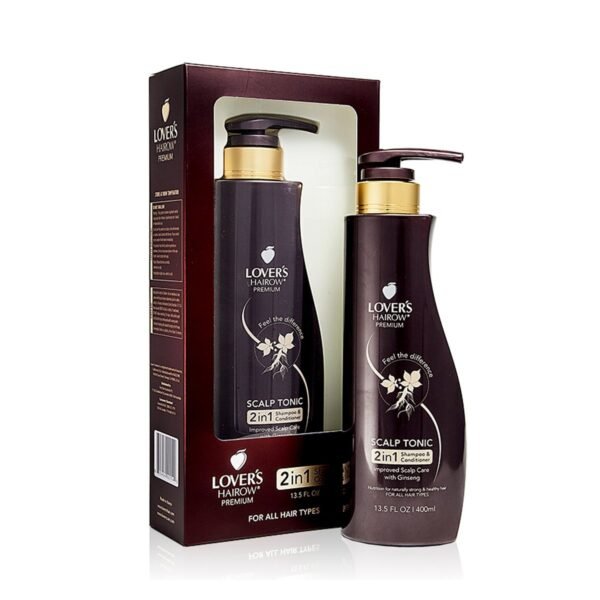
Lover’s Hairow Scalp Tonic 2-in-1 Shampoo & Conditioner — 400ml
An Australian-made herbal scalp treatment that anchors a natural hair growth routine — cleansing the scalp and delivering follicle-supporting actives in a single sulfate-free wash.
- Ginseng, Biota Orientalis & Peppermint — Australian herbal formula
- Cleanses the scalp and stimulates follicles simultaneously
- Sulfate-free, colour-safe and cruelty-free
- Manufactured in Victoria, Australia under GMP standards
Be Bodywise Rosemary Hair Growth Serum Roll-On — 25ml
If you specifically want a dedicated rosemary serum to layer into your routine, this third-party roll-on combines rosemary with Redensyl and Aminexil. (Not a LoverHair product — listed for completeness.)
- Rosemary + 3% Redensyl + 2% Aminexil — triple-action formula
- Roll-on for precise, mess-free scalp application
- SLS, paraben and mineral-oil free
Frequently Asked Questions

Sources & further reading: Panahi et al., “Rosemary oil vs minoxidil 2% for androgenetic alopecia,” SKINmed Journal (2015); DermNet — Minoxidil for hair loss; Australian Government Department of Health (TGA) — consult your pharmacist or GP for product availability.
Ready to Try a Natural Hair Growth Approach?
Shop Australia’s herbal scalp treatments — proudly made in Victoria with clinically recognised ingredients.
Shop Hair Growth Products →This article was produced by the LoverHair editorial team at loverhair.com.au. It is intended for informational purposes only and does not constitute medical advice. Always consult a qualified dermatologist or GP before beginning any hair loss treatment. Some links may be affiliate links — we may earn a small commission at no extra cost to you. Individual results may vary.

