The Hidden Side Effects of
Colouring Shampoo
You Should Know
What most brands won’t tell you — and how to get beautiful grey coverage without the risks.
Colouring shampoos have exploded in popularity across Australia — and it’s easy to see why. No mixing, no developer, no salon appointment, no permanent commitment. Just lather, rinse, and grey coverage in minutes. But before you reach for that bottle every wash day, there are some side effects that don’t make it onto the front label. Some are mild and manageable. Others are worth taking seriously. Here’s what you need to know — and how to choose a colouring shampoo that actually looks after your hair and scalp.
How Do Colouring Shampoos Actually Work?
Understanding the mechanism behind colouring shampoos is key to understanding both their benefits and their risks. Unlike permanent hair colour, colouring shampoos use direct dyes — pigment molecules that coat the outside of the hair shaft without penetrating the cortex. There is no developer (hydrogen peroxide), no ammonia, and no permanent chemical reaction inside the hair structure.
This makes them significantly gentler than traditional dye — but it doesn’t mean they’re entirely without risk. The surfactants (cleansing agents), preservatives, synthetic fragrances, and dye molecules themselves each carry their own profile of potential side effects, particularly with frequent use over time.
The 8 Hidden Side Effects of Colouring Shampoo
These are the side effects that often don’t appear on the box — or are buried in fine print most people never read.
1. Allergic Contact Dermatitis (PPD Sensitivity)
The most serious risk from colouring shampoos is an allergic reaction — particularly to para-phenylenediamine (PPD), a synthetic dye found in many dark-shade colouring products. PPD is one of the most common contact allergens in cosmetics. Reactions range from mild scalp itching and redness to severe contact dermatitis, facial swelling, and in rare cases, anaphylaxis. Crucially, sensitivity develops with repeated exposure — you may use a product many times before a reaction occurs. A 48-hour patch test before every new product is non-negotiable.
2. Scalp Dryness & Irritation
Many colouring shampoos contain sulphates (SLS/SLES) — harsh surfactants that strip the scalp of its natural sebum while cleaning. When used frequently (which the format encourages), this dries out the scalp, disrupts the skin barrier, and can cause itching, flaking, and heightened sensitivity over time. The irony: the more convenient the format, the more often people use it — which is exactly when sulphate-related damage accumulates fastest.
3. Colour Bleed & Skin Staining
Direct dyes in colouring shampoos are designed to deposit on porous surfaces — including skin. Without careful application, hairline staining on the forehead, ears, and neck is a near-universal complaint. This is particularly pronounced with dark shades (brown, black). Additionally, wet colour can transfer onto pillow cases and clothing until fully rinsed and dry. Using a protective barrier cream (petroleum jelly) along the hairline before washing significantly reduces this.
4. Colour Buildup & Uneven Tone
Because direct dyes accumulate on the hair shaft with each use, regular application without proper clarifying can lead to colour buildup — particularly at the ends where hair is older and more porous. This manifests as an uneven, darker tone at the ends compared to roots, or a flat, muddy appearance that looks less natural over time. Using a clarifying wash once every 2–3 weeks prevents this from becoming a problem.
5. Reduced Hair Shine Over Time
Repeated deposition of colour molecules on the hair cuticle can gradually roughen the cuticle surface — the outer layer responsible for your hair’s light-reflecting shine. This effect is subtle but cumulative over months of frequent use. A weekly deep conditioning treatment, preferably with a product containing keratin or amino acids, helps maintain cuticle smoothness and counteracts this effect.
6. Scalp Sensitivity to Heat
Some users notice their scalp becomes more reactive to heat — hot showers, blow drying, or warm weather — after extended use of colouring shampoos. This is likely related to the cumulative drying effect of sulphates and repeated dye exposure on the skin barrier. Lowering shower temperature and reducing direct heat tool use gives the scalp time to recover its barrier function.
7. Premature Fading in Swimmers
Chlorine and salt water are highly effective at stripping direct dyes from the cuticle surface. If you swim regularly, your colouring shampoo results will fade significantly faster than the typical 4–6 wash window. Wearing a swim cap and rinsing hair with fresh water immediately after swimming are the most effective preventive measures. A colour-protecting leave-in conditioner also helps seal the cuticle before pool exposure.
8. Use During Pregnancy — Check the Formula
While colouring shampoos are far safer than permanent dyes, some formulations — particularly those containing synthetic dyes like resorcinol or PPD — are not recommended during the first trimester of pregnancy due to limited safety data. Semi-permanent, direct-dye formulations without PPD or resorcinol (such as the Lover’s Hair Salon range) are considered a safer alternative during pregnancy, but always consult your GP or obstetrician before use.
Ingredients to Avoid in Colouring Shampoos
Not all colouring shampoos are made equal. These are the ingredients with the strongest evidence of causing harm — scan the label before you buy.
The leading cause of severe allergic reactions to hair colour worldwide. Common in dark shades. Linked to contact dermatitis, swelling, and anaphylaxis in sensitised individuals. Avoid entirely if you have a history of dye allergy.
A synthetic dye coupler used alongside PPD in oxidative colour. A known endocrine disruptor and skin sensitiser. Listed as a hazardous substance by the EU’s Scientific Committee on Consumer Safety (SCCS).
Sodium Lauryl Sulphate and Sodium Laureth Sulphate — harsh surfactants that strip natural oils from scalp and hair. Particularly problematic in colouring shampoos used frequently. Cause dryness, irritation, and accelerated colour fade.
Listed simply as “Fragrance” or “Parfum” on labels — can contain dozens of unlisted chemical compounds. A common sensitiser associated with scalp irritation and contact dermatitis, especially in those with reactive skin.
Preservatives like DMDM Hydantoin, Quaternium-15, and Imidazolidinyl Urea slowly release formaldehyde — a known carcinogen and allergen. Found in some budget colouring shampoos. Check the full INCI ingredient list.
While rare in colouring shampoos (more common in permanent dye), some products use ammonia or ammonia derivatives to improve dye penetration. Causes cuticle damage, scalp irritation, and that characteristic harsh chemical smell.
How to Use Colouring Shampoo Safely — 6 Rules
✓ Always Do This
- Patch test 48 hours before first use on inner arm
- Apply barrier cream (Vaseline) along hairline before washing
- Wear gloves during application — especially dark shades
- Use 2–3 times per week maximum, not daily
- Follow with a sulphate-free conditioner to seal cuticle
- Clarify with a gentle cleansing wash every 2–3 weeks
- Check the full ingredient list before purchasing
- Store away from direct sunlight to preserve dye stability
✗ Never Do This
- Never skip the patch test — even if you’ve used it before
- Never apply to broken, irritated, or sunburned scalp
- Never mix different colouring shampoo brands together
- Never use on eyebrows or eyelashes — risk of eye injury
- Never leave on longer than directed — won’t improve results, increases irritation risk
- Never use over freshly bleached hair without testing first
- Don’t swim or exercise heavily in the first hour after use
Colouring Shampoo vs Permanent Dye — Side Effects Compared
| Side Effect | 🧴 Colouring Shampoo | 💈 Permanent Hair Dye |
|---|---|---|
| Structural hair damage | ✓ Minimal — no peroxide, no cortex penetration | ✗ Significant — peroxide breaks disulfide bonds |
| Allergic reaction risk | Moderate — if PPD present | High — PPD + resorcinol typically both present |
| Scalp dryness | Moderate with sulphate formulas / frequent use | High — developer and alkalisers are very drying |
| Colour fade speed | Fast — fades in 4–8 washes | Slow — lasts 4–8 weeks before root regrowth visible |
| Skin/scalp staining | Common — especially dark shades | High — permanent staining possible if left on skin |
| Safe during pregnancy | Generally safer — check for PPD/resorcinol absence | Not recommended in first trimester — consult GP |
| Commitment level | Low — colour fades naturally, easy to change shade | High — permanent; requires colour correction to remove |
| Cost per use | Low — $25–$50 per product lasting 8–12 uses | Higher — salon cost $80–$200+ every 6–8 weeks |
What to Look for in a Safe Colouring Shampoo
Now you know what to avoid — here’s the positive checklist for a colouring shampoo that’s kind to your hair, scalp, and health long-term.
✓ Safe Colouring Shampoo Checklist
- PPD-free formulation
- Resorcinol-free
- Sulphate-free (SLS/SLES-free)
- Ammonia-free
- No formaldehyde-releasing preservatives
- Cruelty-free and not tested on animals
- Australian-made or TGA-compliant
- Full INCI ingredient list available
- Fragrance-free or naturally scented
- Conditioner included or conditioning agents in formula
- Patch test recommended on pack
- Dermatologically tested
A Safer Way to Cover Grey — Lover’s Hair Salon Colouring Shampoo
If you’re looking for a colouring shampoo that ticks every item on the safety checklist above, the Lover’s Hair Salon Colouring Shampoo range is Australian-made in Victoria, sulphate-free, and formulated without the harsh chemicals found in many imported colouring shampoos. Available in five shades for a natural, buildable result with every wash.
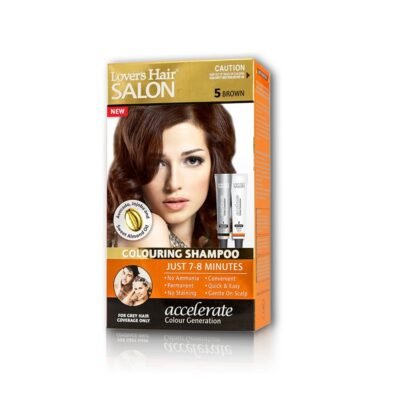
Lover’s Hair Salon Colouring Shampoo – #5 Brown (2 × 60ml)
A warm, natural brown shade ideal for light-to-medium brown hair wanting to refresh their tone and blend greys. Gentle enough for regular use — no ammonia, no peroxide, no harsh sulphates.
- Sulphate-free, ammonia-free, peroxide-free formula — minimal side effect profile
- Gentle direct-dye system — colours without penetrating or damaging the cortex
- Built-in conditioning agents — leaves hair soft, not stripped
- Australian-made in Victoria under GMP manufacturing standards
- Cruelty-free — no animal testing, ever
- 2 × 60ml — enough for multiple applications
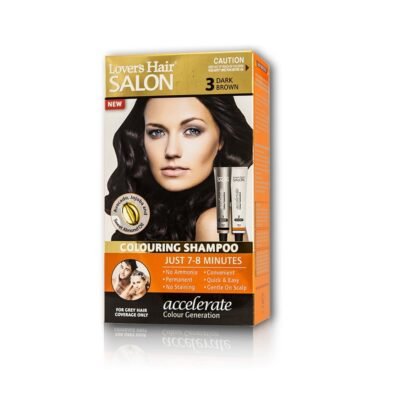
Lover’s Hair Salon Colouring Shampoo – #3 Dark Brown (2 × 60ml)
A rich, deep dark brown for medium-to-dark brown hair — covers grey beautifully while maintaining depth and dimension. The same gentle, sulphate-free formula without the harsh chemicals of conventional dark-shade dyes.
- Deep, rich dark brown coverage — blends grey seamlessly from the first wash
- Sulphate-free, ammonia-free, peroxide-free — safe side-effect profile for regular use
- Direct-dye formulation — surface colour deposit only, no cortex damage
- Conditioning formula — adds softness and manageability with each wash
- Australian-made in Victoria; cruelty-free and sulphate-free
- 2 × 60ml pack — convenient for touch-ups between salon visits
Frequently Asked Questions
Cover Grey the Safer Way
Sulphate-free, ammonia-free, peroxide-free — Australian-made grey coverage you can feel good about using. Available now on Amazon AU with fast delivery nationwide.
Shop Colouring Shampoo on Amazon AU →This article was produced by the LoverHair editorial team at loverhair.com.au. It is intended for informational purposes only and does not constitute medical advice. Always patch test before using any new colouring product and consult a dermatologist if you have a history of contact allergy. Some product links are affiliate links — we may earn a small commission at no extra cost to you. Individual results may vary.
