Hard Water Hair Loss in Australia
— Is Your Tap Water Thinning Your Hair?
You wash your hair every day, use quality products and still notice it thinning, breaking and feeling dry. The culprit might not be your shampoo or stress — it could be the water coming out of your tap. Hard water is one of the most overlooked causes of hair damage in Australia, affecting millions of households from Adelaide to Perth. Here’s everything you need to know — and what to do about it.
What Is Hard Water — and Why Does It Matter for Your Hair?
Hard water contains high concentrations of dissolved minerals — primarily calcium and magnesium — that are picked up as water passes through limestone and chalk rock formations underground. The more minerals present, the “harder” the water.
When hard water contacts your hair and scalp, these minerals do two damaging things. First, they bond to the hair shaft, creating a rough mineral coating that makes hair feel dry, tangled and dull. Second, they accumulate on the scalp, clogging pores, disrupting the scalp’s natural pH, and interfering with follicle function over time.
Unlike soft water, hard water also reacts with the surfactants in shampoo to form a soap scum — which is why your shampoo won’t lather properly and why your hair never feels truly clean after washing in a hard water area.
How Hard Is Your City’s Tap Water? — Australian City Guide
Water hardness is measured in milligrams per litre (mg/L) of calcium carbonate (CaCO₃). Anything above 120 mg/L is considered hard; above 180 mg/L is very hard. Here’s how Australia’s major cities compare:
| City | Approx. Hardness (mg/L) | Level | Hair Risk |
|---|---|---|---|
| Adelaide |
130–350+ mg/L
|
Very Hard | Very High — mineral build-up, breakage, scalp disruption |
| Perth |
60–200 mg/L
|
Hard | High — varies significantly by suburb and source |
| Melbourne |
10–80 mg/L (metro) / up to 200 (outer)
|
Moderate | Medium — outer suburbs and growth corridors harder |
| Brisbane |
50–100 mg/L
|
Moderate | Low-Medium — generally manageable with good products |
| Sydney |
40–60 mg/L
|
Soft | Low — among Australia’s softest major city water |
| Canberra |
40–70 mg/L
|
Soft | Low — generally soft, minimal mineral build-up |
| Darwin |
80–150 mg/L
|
Moderate | Medium — seasonal variation, higher in dry season |
| Hobart |
20–50 mg/L
|
Soft | Very Low — some of Australia’s softest water |
* Hardness levels vary by source, season and local infrastructure. Check your water utility’s annual water quality report for precise local readings.
Signs That Hard Water Is Damaging Your Hair
Hard water damage is gradual and easy to confuse with other causes. Look for these specific signs:
Hair feels straw-like, rough or gritty even right after washing and conditioning
Hair looks lifeless and lacks shine despite using moisturising products
Your shampoo won’t foam or lather properly, and you need more product than usual
Hair tangles excessively and feels impossible to detangle without breaking
Scalp feels dry, itchy or flaky even if you don’t have dandruff naturally
More hair snapping mid-shaft and collecting in your brush than you’d expect
Exactly How Hard Water Damages Hair — The Science
Calcium ions bond to negatively charged hair proteins, roughening the cuticle layer. This creates friction between hair strands, leading to tangling, frizz and mechanical breakage over time.
Magnesium accumulates on the scalp’s surface, altering the skin barrier function and disrupting the natural microbiome balance — contributing to scalp irritation, flaking and blocked follicles.
Hard water reacts with anionic surfactants in shampoo to form insoluble calcium and magnesium soaps. This sticky residue coats the scalp and hair shaft, making hair feel perpetually unclean and weighing it down.
Hard water has a high alkaline pH (7.5–8.5), while healthy hair and scalp sit at 4.5–5.5. Repeated alkaline exposure swells the hair cuticle, strips natural oils and creates the ideal environment for scalp inflammation.
How to Protect Your Hair from Hard Water — 6-Step Australian Guide
Switch to a Sulfate-Free, Chelating Shampoo
Chelating agents like EDTA, citric acid and phytic acid chemically bind to calcium and magnesium ions, lifting mineral deposits from your hair and scalp with each wash. This is the single most impactful product change you can make. Pair with a sulfate-free formula to avoid stripping your scalp’s natural oils alongside the minerals.
Use a Weekly Apple Cider Vinegar (ACV) Rinse
Dilute 2 tablespoons of raw apple cider vinegar in 500ml of water and pour through your hair after shampooing. ACV is mildly acidic (pH ~3), which helps neutralise the alkaline mineral residue left by hard water and restore your scalp’s natural pH. Leave for 2–3 minutes, then rinse thoroughly. Use once per week.
Apply a Daily Scalp Tonic or Serum
A leave-in scalp tonic with anti-inflammatory herbal actives — such as Red Ginseng, Fo-Ti Root or Ginseng Extract — helps counteract the scalp disruption caused by mineral build-up. Applied after washing on a damp scalp, a daily tonic keeps follicles nourished and the scalp environment balanced even when your tap water is working against you.
Install a Shower Filter
Shower filters designed to remove calcium, magnesium and chlorine can significantly reduce the mineral load hitting your scalp with every wash. Look for filters rated for calcium carbonate reduction — KDF-55 and vitamin C filters are among the most effective. Replace cartridges every 3–6 months as directed. Note: filters reduce minerals but don’t eliminate them entirely.
Deep Condition Weekly
Hard water strips moisture from the hair shaft. A weekly deep conditioning treatment or hair mask replenishes lost lipids and proteins, restoring flexibility to brittle strands and reducing breakage. Look for treatments containing keratin, ceramides or argan oil — these help seal the damaged cuticle layer that hard water has roughened.
Rinse with Filtered or Bottled Water (Last Resort)
For those in very hard water areas like Adelaide, doing a final rinse with filtered or cool boiled water can make a noticeable difference to hair feel and shine. It’s not practical every day, but even once per week as your final rinse step can help reset the mineral build-up between clarifying washes.
Best Products for Hard Water Hair Damage in Australia
These are our top picks for Australians dealing with hard water hair damage — all available with Australian delivery.
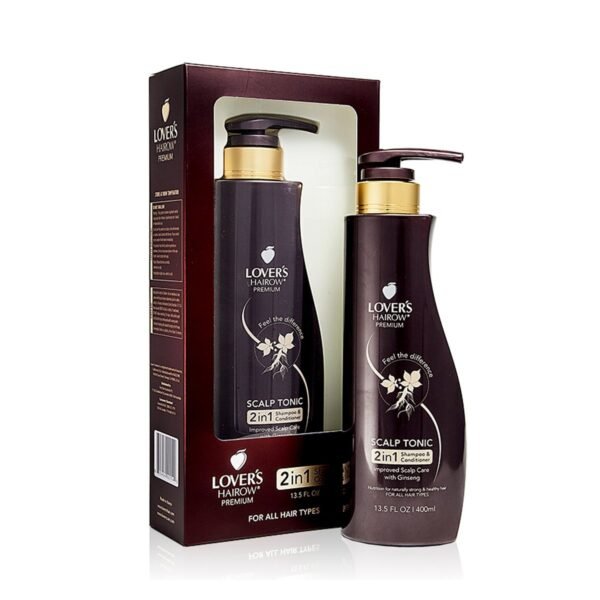
Lover’s Hairow Scalp Tonic 2-in-1 Shampoo & Conditioner – 400ml
- Sulfate-free — won’t strip natural oils or worsen mineral damage
- Ginseng + Biota Orientalis — soothes scalp inflammation from hard water
- Lightweight formula — doesn’t add to the mineral build-up problem
- Australian-made in Victoria — formulated for Australian water conditions
- Colour-safe and suitable for daily use
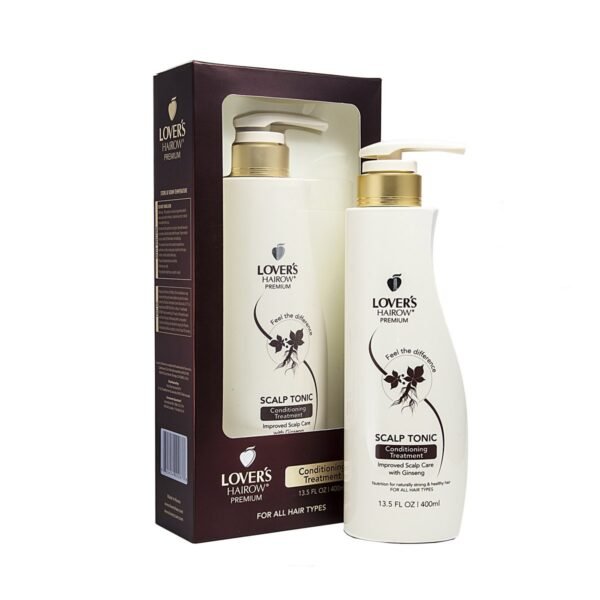
Lover’s Hairow Premium Scalp Tonic Conditioning Treatment – 400ml
- Hydrolyzed Keratin rebuilds the damaged cuticle layer caused by mineral roughening
- Ceramide 3 seals moisture back into hair stripped by hard water’s high pH
- Red Ginseng soothes scalp inflammation and supports follicle health
- Restores shine, smoothness and manageability to brittle hard-water hair
- Sulfate-free — safe for colour-treated and chemically processed hair

BondiBoost Procapil Hair Tonic – 125ml
- Procapil targets follicle ageing worsened by hard water scalp stress
- Leave-in formula — no rinsing, maximum scalp contact time
- Lightweight and non-greasy — no added weight to already flat hair
- Vegan, cruelty-free, Australian-made brand
- Ideal for fine or thinning hair affected by mineral build-up
Can Hard Water Hair Damage Be Reversed?
Yes — hard water hair damage is largely reversible, especially if caught early. Unlike follicle-level hair loss, the damage caused by hard water is primarily structural: mineral deposits on the cuticle, disrupted scalp pH and increased breakage. Address the root cause and the hair can recover.
Here’s a realistic timeline for recovery once you start a hard-water-appropriate routine:
- Week 1–2: Shampoo starts lathering better, hair feels less rough immediately after washing
- Week 3–4: Noticeable reduction in tangling and flyaways, scalp itchiness decreases
- Week 6–8: Hair feels softer, shinier and more manageable; shedding begins to normalise
- Month 3–6: Visible improvement in density as breakage reduces and new growth is retained
The key is consistency. Switching products once or twice won’t deliver lasting results — commit to a hard-water-appropriate routine for at least 3 months before assessing progress.
Frequently Asked Questions
Protect Your Hair from Australia’s Hard Water
Shop sulfate-free, herbal scalp treatments made specifically for Australian hair and water conditions — proudly manufactured in Victoria.
Shop All Hair Growth Products →This article was produced by the LoverHair editorial team at loverhair.com.au. Water hardness data is sourced from publicly available Australian utility annual water quality reports and may vary by suburb, season and local infrastructure. This article is intended for informational purposes only and does not constitute medical advice. Some product links are affiliate links — we may earn a small commission at no extra cost to you. Individual results may vary.
